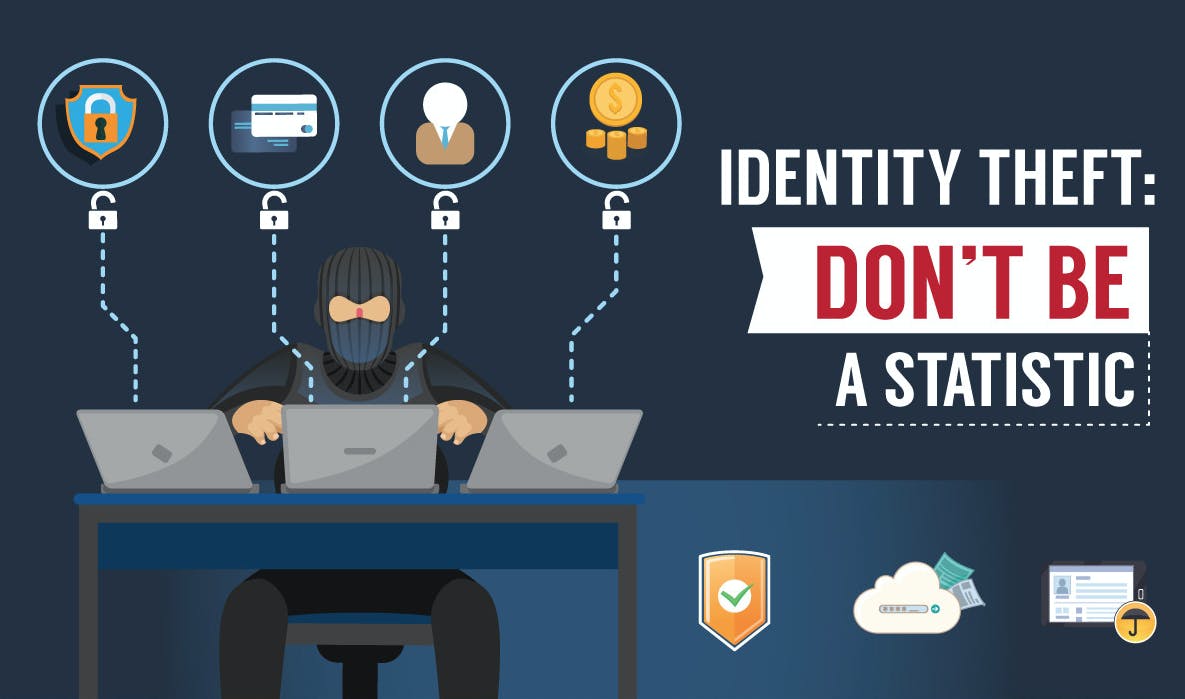
Amidst the 1.5 billion records worth of personal data stolen from companies by hackers in January 2020 alone, it wouldn’t be long before a hacker makes use of the data. Thus, an innocent individual like yourself could soon start seeing strange purchases appear on your card or banks calling you about loans you never opened. With 14.4 million identity theft victims in 2018, individuals need to know what to do. But what can you do to catch and prevent identity theft sooner?
Considering that long term identity theft could take months to heal from without a confirmation that a full recovery is conceivable, it is important for individuals to know how to shield themselves now. Robert Sicilano, an identity theft expert at BestIDTheftCompanys.com, suggests that “everyone in this country should assume that their personal information is already compromised.” As a result, Sicilano urges that everyone should be very cautious about the kind of information they put online. I agree with Sicilano’s suggestion, though I feel that he could be more detailed about the information that individuals should not put online as well as what would happen if they do so.
From my experience, such information extends to scans and personal documents. Regardless of how secure a company claims to be, I’d recommend that one should always store important documents offline. This applies especially to cloud storage services such as Google Drive, which have problems in the past. For instance, in the theoretical case of a breach where a hacker steals the credentials of Google Drive users and accesses their account, not having important documents on Google Drive would mean the hacker cannot do much with their account.
Still, while storing important information offline will help curb identity theft in many cases, at times companies such as Chase and Paypal will demand documents such as driver licenses, card numbers, and social security numbers. Therefore, in order to use their services, this would leave you and me with no choice but to give them such information. Like when I signed up for PayPal, they required me to give them my SSN to confirm my identity. Thus, after providing such companies with personal information, I needed to figure out what to do in order to protect my identity.

Over the period of the last decade, many experts were able to fabricate guidelines on what individuals can do to protect their identity on such sites. Such steps include typical procedures like changing passwords regularly or looking out for breaches. However, for many individuals like you and me, following such guidelines could take hours out of the day. To Eva Velasquez, president and CEO of the nonprofit Identity Theft Resource Center, “nine out of 10 people” don’t take identity awareness seriously. However, as Velasquez notes, the “five minutes to follow up on something that’s out of the ordinary and weird” can save “a lot of headaches later on” when identity theft arises. To Velasquez’s support, I would have to say that his “five minute rule” is a great approach to the problem. But once again, the generality of the rule makes it difficult to apply. Hence, building off from Velasquez’s “5 minute rule”, I argue that a quick and simple solution could be crafted to prevent digital identity theft on sites containing your personal information.
I believe that by getting the word out to individuals on the time it really takes to take care of their personal data, more individuals will be able to stop identity theft sooner. Instead of relying on security features of the site and new headlines that could be delayed by years from the moment of a breach, an individual should be their own responder. I believe that by looking over the daily activity of your credit card for a few minutes every day, you could scan for identity theft. This would allow you to contact the bank months before the bank contacts you regarding identity theft. Furthermore, this would prevent the headache for you and me of backtracking over unfamiliar purchases over a long course of time. Aside from bills, by looking over other important digital accounts such as email, you could check for suspicious logins and emails you weren’t expecting. Ultimately, through my version of Velasquez’s “5-minute rule”, you and I would be able to catch identity theft sooner without taking a lot of time from our days.
 Data Breaches
I am often terrified of identity theft, as it’s difficult to tell when websites are dangerous. Hackers and websites often pose a threat, as identity theft can cause extreme trouble and harm to an individual’s life. I agree that the 5 minute rule is a good approach to the problem, as if identity theft does occur, the amount of time to fix it will be much greater than 5 minutes. Taking 5 minutes to observe weird and suspicious activity can save you a lot of time and stress in the long run. My grandma suffered from a case of identity theft, where lots of money was stolen from her. This took a long time to fix, where if she was more aware and careful, she could’ve avoided this situation. I am interested in other real life examples of identity theft, and I hope you could incorporate more examples in the future!
LikeLike